

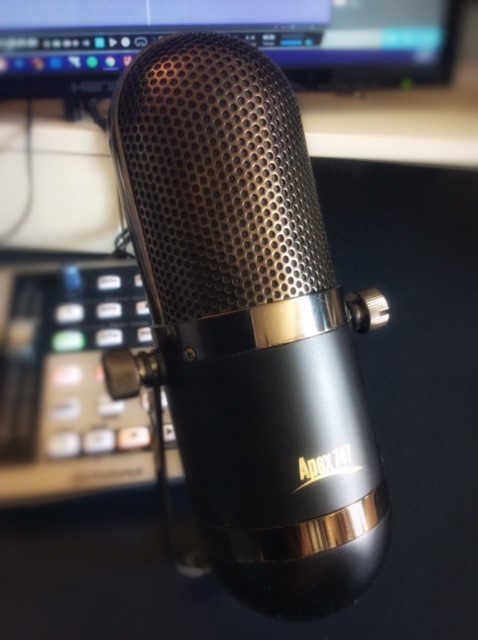
The Apex 747 hypercardioid large-diaphragm dynamic mic is one cool jellybean. Evoking the RCA ribbon microphone look of the 40s and 50s, this is a slick stand topper that’s sure to get second looks on stage. However, while it’s a decent looker, and its basic sound resembles that of the Shure SH55, it’s a fairly noisy mic in stock form. For a mic eater, there are loud P-pops that are tough to manage with mic technique.
Now, with a mic of this type, it would be a shame to throw a big foam filter over the metal screen. Let’s face it, looks are a big factor when choosing a mic like this, so style has to shine. After rehearsing with a blues-rock band, it was obvious, though, that style wouldn’t save the sound.
Suspecting a light-duty internal pop filter, I wasn’t surprised upon disassembly. Case in point:

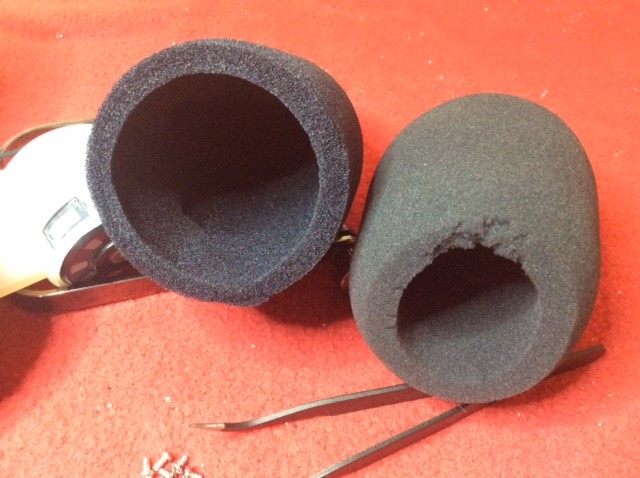
The foam of the 747 filter is about half what you’d expect from the typical five-dollar foam ball. Though there’s a fine mesh inside the perforated metal casing, the three layers put up little resistance to plosives.

The stock filter stayed inside the mic shell upon disassembly, and it wasn’t a tight fit at all. Though this is a large capsule for a dynamic mic, there was still plenty of room. A general eyeball estimate told me the larger aftermarket foam ball would work.

However, inside diameter was obviously much smaller, so instead of loading the new filter into the shell, I stretched it over the capsule. It was a bit snug going over the widest diameter, but not unreasonably. Note the X marked on the replacement filter. While it’s easy to orient the capsule when you can see the front face, the tight fit makes it a little tricky, particularly with the tiny screws that hold the diaphragm to upper shell, as well as to the lower shell.
Aligning the screw holes was the most challenging part of the upgrade, particularly with big, stubby mitts like mine. Tweezers to the rescue:
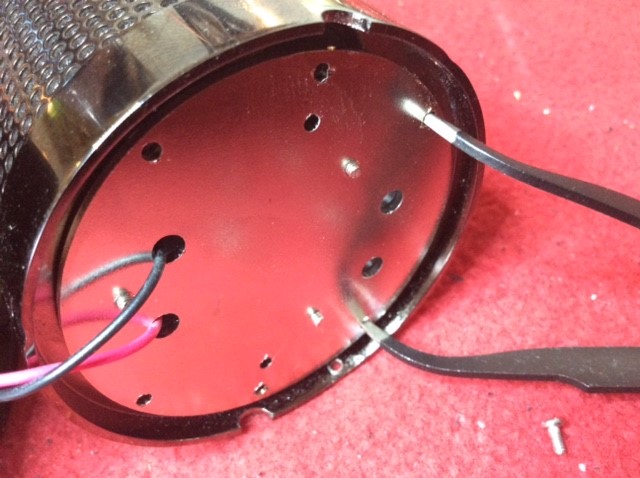
With the tweezers aligning plate with screw holes, threading the opposite pair was easy.
Testing the mic with the new filter in place, there is a drastic reduction in plosive transfer, though it’s still a bit on the noisy side. In the context of a bar gig, however, quality is now acceptable without altering the Cool Factor of this mic’s mojo.
-Scott.
London, 05/17/2019
 Shadow Factory
Leave a comment